
Витая пара состоит из двух изолированных проводов, скрученных вместе, что делает её особенно подходящей для дифференциальной передачи сигналов. По сравнению с параллельно скрученными проводами, она может более эффективно подавлять помехи. Характеристики витой пары проявляются в следующих двух аспектах:
По сравнению с параллельными проводами, значения емкости связи каждого провода в витой паре с источником помех или заземлением ближе друг к другу, что приводит к более сбалансированному импедансу, как показано на рисунке 1.
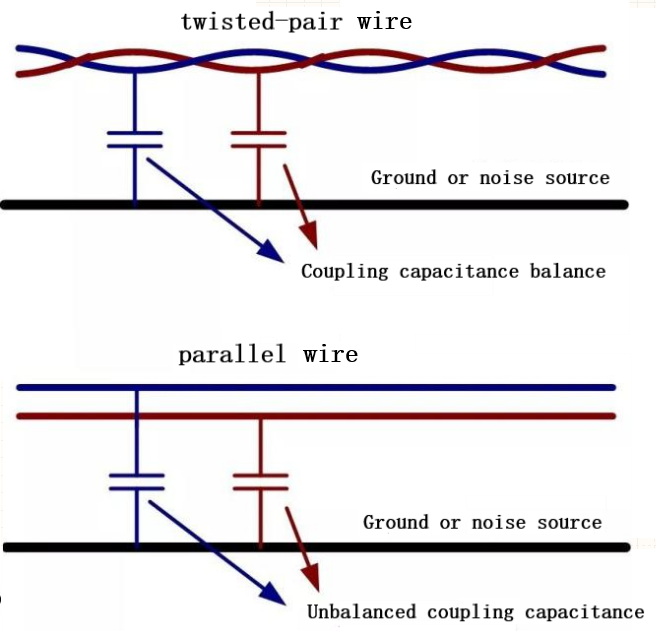 Рисунок 1
Поскольку витые пары проводов плотно намотаны друг на друга, емкость связи между двумя проводами и источником шума, а также импеданс относительно земли практически одинаковы. Ток помех, протекающий от источника шума в две сигнальные линии, практически идентичен, а разница между двумя сигнальными линиями остается неизменной. Ток от емкости связи преобразуется в синфазные помехи. Как показано на рисунке 2, C1=C2 и Z1=Z2, поэтому ток, протекающий от источника помех в C1 и C2, одинаков, что означает, что напряжения, генерируемые на линиях 1 и 2, равны, и Vn=0. Поскольку метод дифференциальной передачи сигнала обладает превосходной способностью подавления синфазных помех, эффекты емкостной связи могут быть устранены.
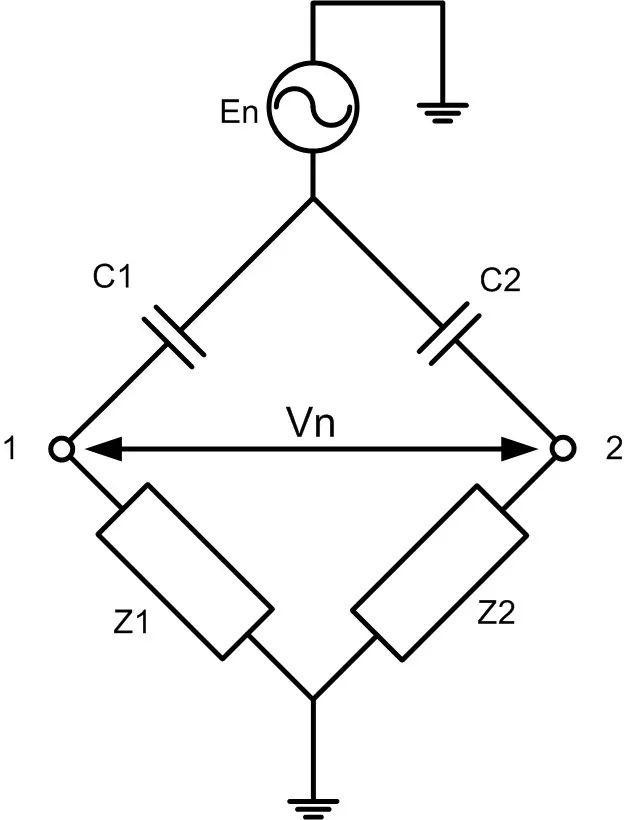 Рисунок 2
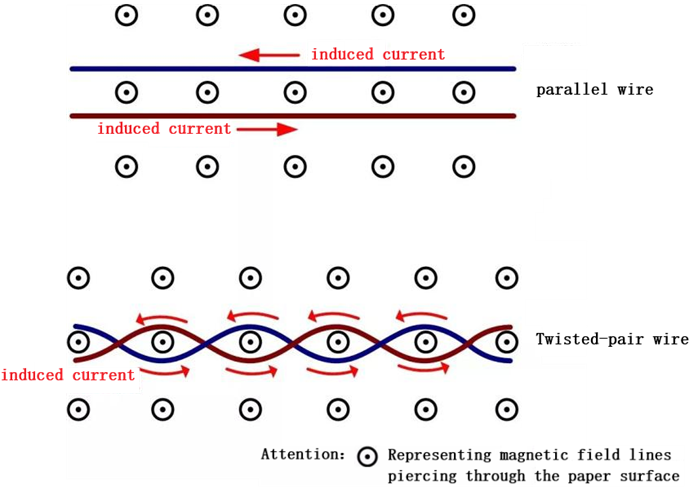
При использовании параллельных линий две сигнальные линии образуют очень узкую петлю, которая будет улавливать помехи магнитного поля из окружающей среды. В конструкции витой пары два проводника линии передачи скручиваются с фиксированным интервалом, что приводит к изменению направления электродвижущей силы, создаваемой магнитным полем, в каждой соседней «малой петле», тем самым последовательно компенсируя её. С точки зрения схемы, взаимная индуктивность в каждой соседней «малой петле» направлена противоположно источнику шума, и общая взаимная индуктивность проводников становится равной нулю. Как показано на рисунке 3, когда параллельные линии подвергаются воздействию внешнего магнитного поля, индуцированные токи в двух проводниках не могут компенсировать друг друга, что приводит к возникновению большого индуцированного напряжения, влияющего на передачу сигнала. Однако конструкция витой пары приводит к взаимной компенсации индуцированных токов в проводниках, предотвращая генерацию индуцированного напряжения.
В системах дифференциальной передачи данных кабели витой пары позволяют исключить емкостную и индуктивную связь с внешними источниками помех. Поэтому кабели витой пары широко используются в системах дифференциальной передачи сигналов, таких как CAN и RS-485.
оставить сообщение
Отсканируйте QR-код для отправки в WeChat :